Get Back on the Course, Court, and Trail — Without Waiting It Out
Sports injuries don't sideline you because you're old. They sideline you because something in the joint chain stopped moving the way it should. I find the restriction, adjust it, and build a plan around getting you back to what you were doing before you got hurt.
The Sports Injuries I Treat Most Often in the Hardeeville Area
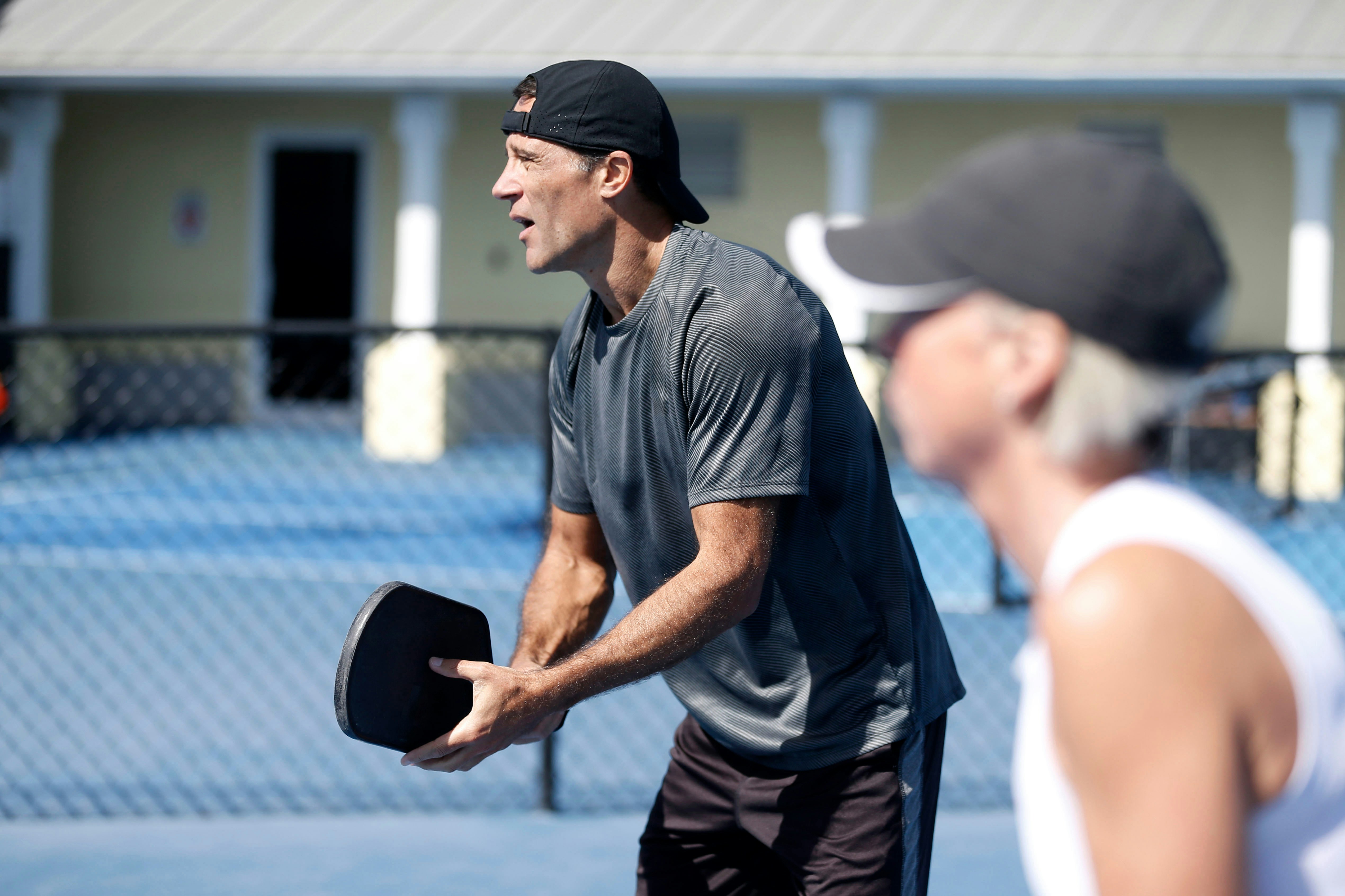
Sun City Hilton Head has three golf courses, tennis courts, 30 pickleball courts, walking trails, and two fitness centers. The patients I see from Sun City, Bluffton, and Ridgeland aren't sedentary — they're active adults who got hurt doing something they love and want to return to it as fast as possible. These are the injuries I treat most:
- Golf: Lumbar rotation strains, rib joint injuries, hip restriction, shoulder pain from the follow-through
- Tennis and pickleball: Lateral elbow pain (tennis elbow), shoulder impingement, wrist sprains, knee and ankle stress from lateral movement
- Running and walking: Knee pain, hip flexor tightness, ankle instability, plantar fascia strain
- Swimming and cycling: Shoulder overuse, neck and upper back stiffness, knee tracking problems from repetitive pedaling
- General athletic overuse: Accumulated joint restriction that doesn't produce a single acute injury but gradually degrades performance and increases injury risk
Why Most Sports Injuries Aren't Just a Spine Problem
Most chiropractors adjust the spine. I adjust every joint in the body — ankles, knees, hips, elbows, wrists, shoulders, ribs, and toes — using the same precise, manual techniques I apply to the lumbar and cervical spine. That distinction matters for sports injuries, because the injury you feel is rarely the only joint involved.
A golfer with low back pain almost always has a restricted hip on the same side. A pickleball player with elbow pain is often compensating for a wrist or shoulder that isn't tracking properly. Treating the site of pain without assessing the full movement chain is how injuries become chronic. I assess the whole chain and adjust what's actually driving the problem.
Golf Injuries: The Hip, the Lumbar, and the Rib Cage All Have to Work Together
The golf swing is a full-body rotation that loads the lumbar spine and requires the hips to drive, the rib cage to rotate, and the shoulders to sequence correctly. When any one of those joints locks up, the rest of the chain compensates — and that's when something tears, strains, or seizes.
Golf injuries almost always involve more than one structure. When a patient comes in after tweaking their back on the course, I'm evaluating the lumbar segments, the sacroiliac joints, the hip mobility on both sides, and the rib articulations that allow trunk rotation. Adjusting the lumbar spine alone and sending someone home is not a complete treatment. Getting you back on the course is the goal — and that means working backward from the full swing, not just the site of pain.
A Personal Note on Sports Injuries and Why I Take Them Seriously
I came to chiropractic through my own sports injury. I know what it's like to be told to rest, ice it, and wait — and I know how inadequate that advice feels when you have a tee time, a court reservation, or a training schedule. That experience shaped how I practice.
I don't manage sports injuries. I work to resolve them. That means a thorough assessment before the first adjustment, on-site digital X-rays when indicated, and a clear explanation of what I found and what I'm doing about it. You'll leave the first visit knowing what's wrong and what the plan is — not wondering whether anything actually happened.
Maintenance Care for Athletes Who Want to Stay Ahead of Injury
The best sports injury is the one that doesn't happen. Patients who maintain a regular adjustment schedule report fewer acute injuries and faster recovery when they do occur — and the reason is straightforward. More mobile joints absorb force better, move more efficiently, and give you earlier warning when something is starting to restrict before it becomes a full injury.
If you're in your 50s, 60s, or 70s and still playing golf, pickleball, or tennis several times a week, your joints are doing real work. Regular chiropractic care keeps them moving freely, maintains your range of motion, and addresses the small restrictions that accumulate over time before they become the thing that takes you off the court for three weeks. This is proactive care, not crisis care — and it's one of the most practical investments an active adult can make.
Common Questions About Chiropractic for Sports Injuries
Do I need to be in severe pain to see a chiropractor for a sports injury?
No. I treat the full spectrum — acute injuries that happened yesterday and chronic restrictions that have been limiting your performance for months. Many of my patients come in before they're in real pain because they notice their swing is off, their stride feels uneven, or a joint is stiffening after activity. That's the right time to come in.I hurt my elbow playing pickleball. Can a chiropractor actually help with that?
Yes. Elbow pain from racket sports almost always involves a combination of the elbow joint itself, the wrist, and the shoulder. I adjust extremity joints — not just the spine — so I can assess and treat the full chain driving your elbow pain. The pickleball injury page on this site goes into more detail on upper body injuries specifically.Will I need X-rays before you adjust me?
Every new patient at Capital Chiropractic receives a full assessment that includes on-site digital X-rays and a thermal nervous system scan before the first adjustment. I don't adjust blindly. Seeing the structure tells me what I'm working with and lets me choose the right technique — including lighter force options when the clinical picture calls for them.I'm in my 60s. Is chiropractic safe for someone my age who's still very active?
It's not only safe — it's particularly well-suited to active adults in this age group. I use manual adjustments and light force techniques calibrated to each patient's presentation. The increased injury risk that comes with age is largely driven by reduced joint mobility and accumulated postural restriction — both of which respond well to regular chiropractic care.How many visits will it take before I can return to my sport?
That depends on what I find on the initial assessment, how long the injury has been present, and how your body responds to the first few adjustments. I give every patient a clear picture after the first visit — not a vague open-ended treatment plan. Most acute sports injuries in otherwise healthy, active adults respond within a handful of visits. Chronic restrictions that have been building for months take longer.